

Samhain
Celebration to Honour the Dead and Welcome the New Year including two recipes perfect for Samhain and a few reflection questions!

One of the topics I love writing about in my Notes of a Wildflower is the idea of living more in tune with the seasons. Following the Celtic Wheel of the Year, with its eight seasonal festivals, provides a comforting rhythm for me. In this notes, I’ll share more about Litha, one of the solar festivals of the Celtic Year.
A bit of history
Samhain is the first festival on the Celtic Wheel of the Year. It marks the transition from summer to winter. Since the Celts believed everything began in darkness, Samhain also celebrates the start of the new year. It was a time to reflect on the past year, honour your ancestors, and prepare for the dark winter months.
The origin of the word Samhain is not entirely clear. It may come from the Celtic word for gathering, Samani, or possibly from Sam (summer) and fuin (end), meaning “the end of summer.”
Samhain is the last of the three Celtic autumn festivals.
You may like to read my introduction on the Celtic Wheel of the Year:

Life and Death
For the Celts, Samhain was one of the most important and spiritual festivals of the year. It was believed that during this time, the veil between the worlds of the living and the dead was at its thinnest. It’s a moment to connect with loved ones who have passed, to pause and honour them. A time to reflect on life and death — and the rhythm of existence.
On this day, life is often celebrated with a meal where extra plates are set for the deceased. Candles are placed in windows to help guide lost spirits home.
Samhain is also seen as the moment when the sun god Lugh enters the realm of the dead. You might remember Lugh from Lughnasadh, the first of the three autumn festivals.
More About the Dead and Spirits
The Day of the Dead, as celebrated in Latin America, is likely inspired by Samhain. On this day, the dead are honoured and celebrated, and their spirits are welcomed. You might know the Disney movie Coco, which was inspired by this tradition.
Halloween also has its roots in Samhain. The scary costumes, masks, and painted faces were originally meant to ward off evil spirits.

Beginning of the New Year
For the Celts, celebrating Samhain also meant welcoming the new year. Winter was seen as the time when summer retreated and the earth began preparing for spring’s growth. It was a good moment to reflect and release what was no longer needed. Preparations were also made for the winter and the new cycle ahead.
To celebrate the new year, large bonfires were lit during Samhain.
Samhain Rituals
🍂 Create an autumn table, altar, or wreath. Go outside and gather branches, leaves, pinecones, acorns, etc.
🕯 Light candles. You can also place lanterns outside to guide wandering spirits. A bonfire to celebrate the new year is also a great idea!
⭐ Take time to honour loved ones you’ve lost. Celebrate their lives. You might give their photo a special place or write them a letter.
🎃 Host a Halloween party or invite friends for a dinner. Think pumpkin, apple, pear, carrots, warming spices, red wine, cider…
📝 It’s a great time to set intentions and goals.
What to Eat
Samhain foods include apples, pumpkins, nuts, meat, and corn. Warming and nourishing recipes are perfect for this celebration. Think apple pie, pumpkin soup, and hearty stews. A mushroom and nut risotto also fits beautifully. Drink beer, spiced wine, apple cider, or a cup of tea with sage, cinnamon, or valerian.
Pumpkin Spiced Blondies
Ooooh, these are so delicious!
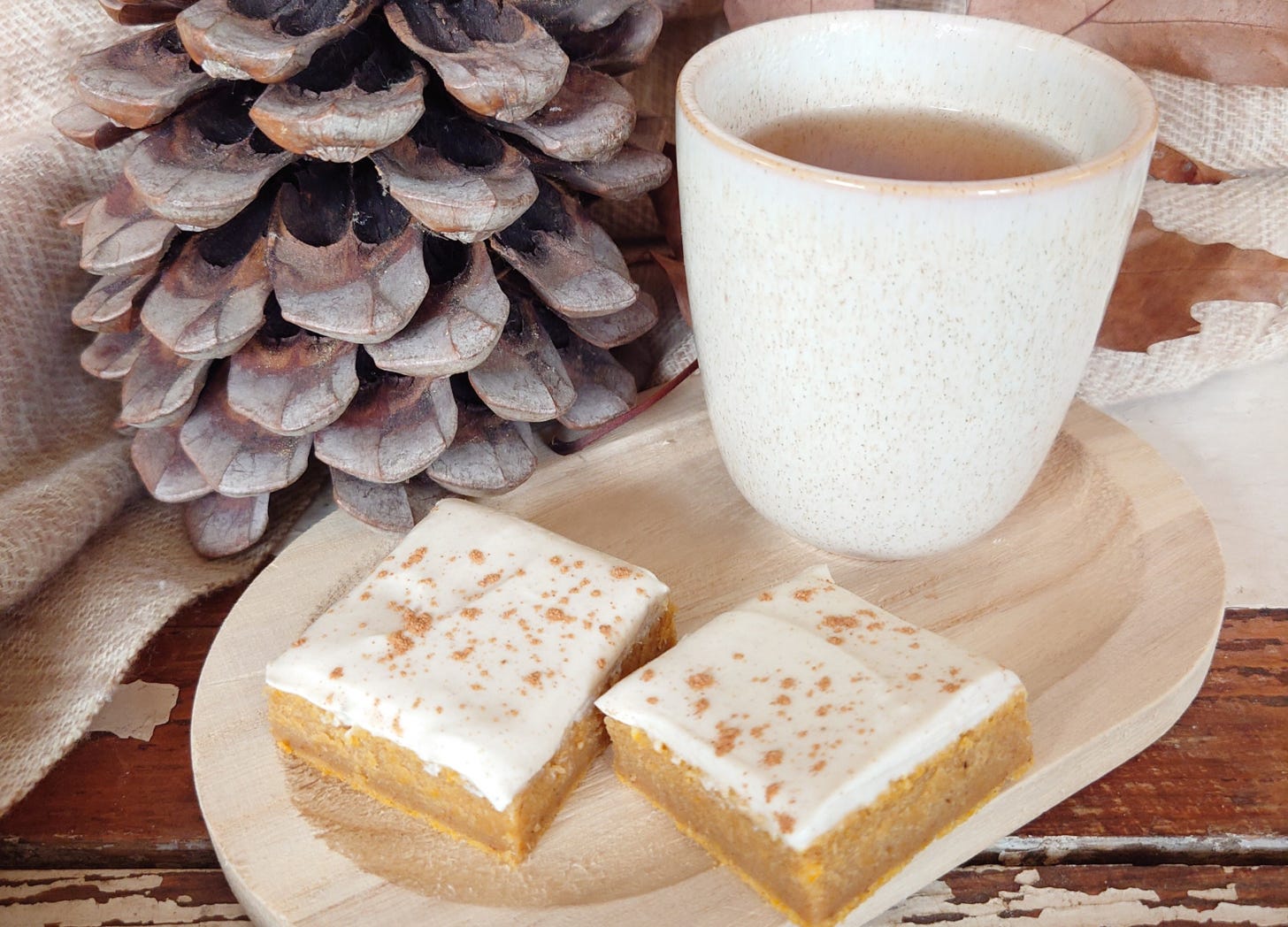
Ingredients (for a 20x20cm square baking dish):
175 g flour
50 g sugar
50 g melted butter
250 g pumpkin purée
1 egg
1 tsp baking powder
2 tbsp pumpkin spice (or gingerbread spice mix)
For the topping:
200 g cream cheese
75 g powdered sugar
1 tsp gingerbread spice
Instructions:
Preheat the oven to 175°C.
Mix all blondie ingredients together.
Line a 20x20cm baking dish with parchment paper.
Pour the batter into the dish and bake for 15–20 minutes.
Let the blondies cool completely.
Mix the cream cheese with powdered sugar and spice.
Spread over the cooled blondies.
You can easily make pumpkin purée by roasting chunks of pumpkin (with skin) at 180°C for 30 minutes. Then blend them in a food processor. You can freeze any leftovers!

Spicy Pumpkin Soup
Nothing better than a warm bowl of homemade soup on a crisp autumn day!
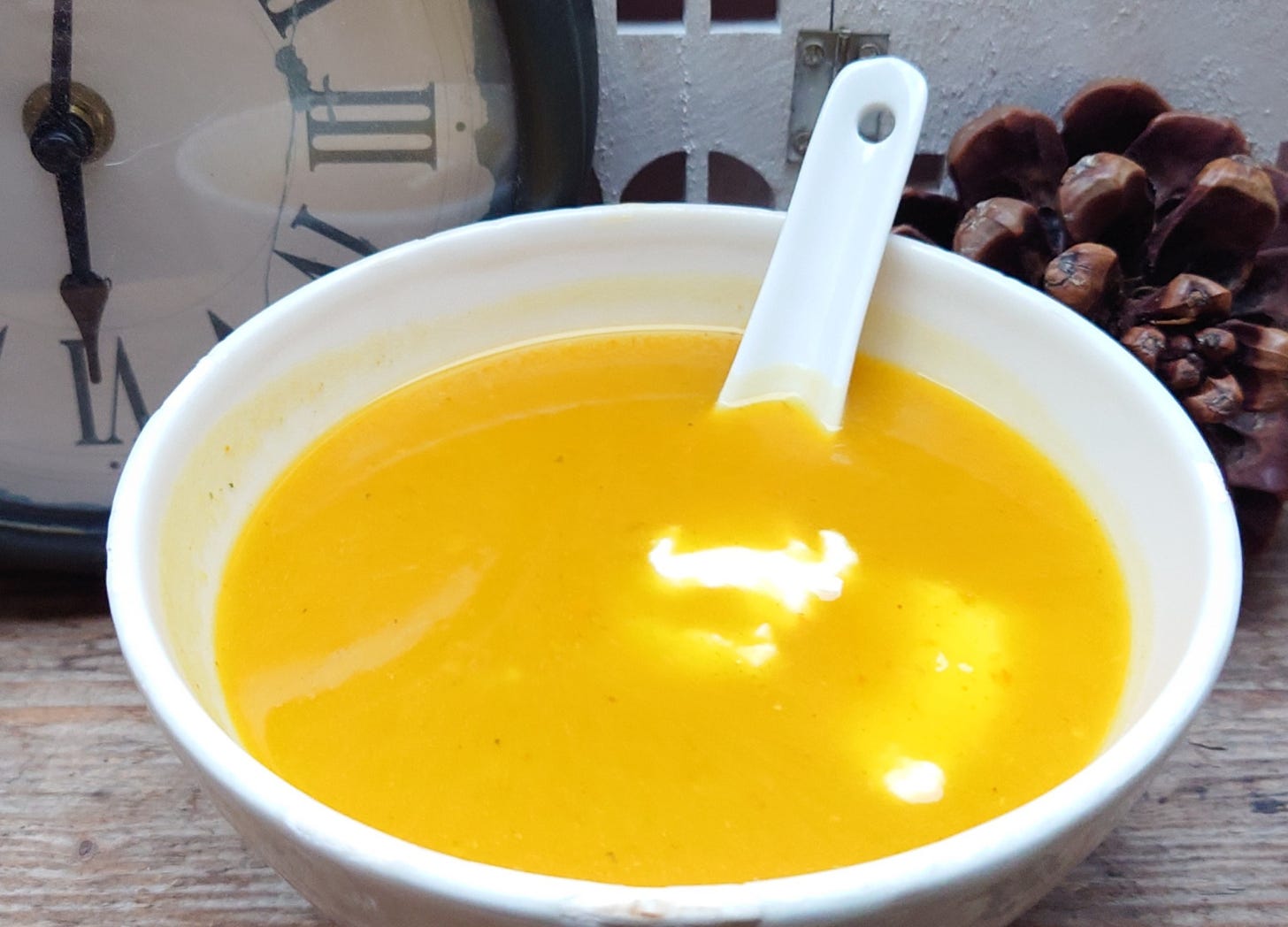
Ingredients (serves 4):
1 pumpkin
1 red chili, deseeded and finely chopped
Olive oil
2 garlic cloves, chopped
2 onions, quartered
2 tsp curry powder
1 litre vegetable stock
A few tbsp Greek yoghurt or quark
Also needed:
A soup pot
A hand blender
Instructions:
Remove the seeds from the pumpkin and cut into 2–3 cm pieces (skin can stay on).
Heat olive oil in the pot and sauté chili, garlic, onion, and curry powder for 2 minutes.
Add pumpkin pieces and cook for another 2 minutes.
Add stock and bring to a boil.
Simmer for 15–20 minutes, then blend.
Serve with a spoonful of yoghurt or quark.
Reflection Questions
Here are a few reflection prompts to inspire your journaling or meditation:
What would you like to let go of when looking back on the past year?
What lessons have you learned this year, and which ones do you want to carry into the new year?
How can you take care of yourself during the coming winter months?
What do you want to honour or remember about your ancestors or loved ones who have passed?

P.S. I’m participating in
challenge to write 12 chapters this year, culminating in an ebook. Consider this the Chapter for October! 😊
Your reflective questions meet me at the perfect time, Hilda. Very inspiring! ✨
Beautiful reflections Hilda, and I love the recipes. I have a few pumpkins and the soup looks perfect 🍂🍄